


AI and Access to Justice: Technology in the Courts and Beyond
From digital evidence management to AI-driven transcription and analytics, technology is transforming how courts and government institutions operate. This panel brings together leaders from Ontario and around the world to explore how innovation is improving access to justice, transparency, and efficiency in public services. Attendees will gain a global perspective on the opportunities and challenges of integrating AI responsibly into judicial and government workflows.

S1- Good afternoon everyone. Thank you so much for joining us for the first session back after lunch. This is technology in the courts and beyond, and the aim of our panel is really bringing together a group of global leaders to explore. Innovation is improving access real challenges of actually integrating AI into judicial workflows and what responsible implementation looks like. So my name is Sasha Saunders. I'm the director of the Legal Innovation Zone at Toronto Metropolitan University, and I'm delighted to be your moderator this afternoon. And we are joined by a fantastic panel. So we have Mona Datt, the CEO of Luma Analytics and a digital transformation leader with over 18 years of experience in And legal and insurance operations we have online with us, I believe all the way from BC. Is that right? Sarah BC yes, Sarah Mccoubrey joining us from BC. Sarah is a Canadian lawyer and the founder of the consultancy calibrate. I so welcome Sarah. We have Keenan Drew who is a consultant, a founder, a researcher and investor in the legal sector. So welcome Keenan. And Keenan is joining us from a little further over the pond I believe. So it's truly a transatlantic panel. So we're going to just jump right in and I'm going to invite the panellists to say a little bit more about themselves in relation to our topic today. So, Sarah, if I can come to you to introduce yourself.
S2- Sure. Thank you very much. It's wonderful to be joining you from across the country here. I work as a access to justice and digital transformation specialist. And I do that in a number of different contexts, really advancing access to justice with governments, with NGOs, with courts. But I think one of the things that brings me to this panel is that I've been retained for the last five years or so as the UN Development Programme's e-justice expert, both working to provide guidance on the global programmes, work around how to see digitalization and digital transformation as a lever of change to increase access to justice and promote the rule of law. And in that context, I've worked with a number of countries at the country office level as they start to design their digital transformation projects. In this last year, that focus has been explicitly on AI and what it means to be seeing AI in the court's context whether whether because the court is welcoming it or because it's coming in through litigants and lawyers and courts are forced to respond to it in both of those kinds of contexts. I'm sure there's some other interesting ideas and examples, and I look forward to those coming up over the course of the discussion with this amazing panel.
S1- Fantastic. Thank you so much, Sarah, and welcome again. Keenan, if I can come to you, if you can tell us a little bit more about yourself in relation to today's topic.
S3- Of course. Thank you so much, Sasha, and to be on this panel and to join this conversation, even though it's kind of a little further across the pond, as you said and it's it's super interesting to have this discussion in the context of so many things and changes that are coming in the space of access to justice, justice, tech and AI. So I've been in the space of law and technology for a long time. You know, as a practising lawyer, I realized that there is a need to bring more technology and more human centred design in the way processes are structured. And then I realized that maybe as an entrepreneur, I can kind of create solutions that can scale and being, you know, being an entrepreneur, technology was that go to tool to bring scale and to bring reach to to the solutions that we were creating for different kind of audiences in India at the time. And one initiative led to three. So I've seen, you know, a lot of successes, not so much successes as an entrepreneur. And then eventually my investor hired me in the Netherlands. So I kind of ran accelerators on legal tech and justice tech across Africa and Middle East and a lot of learnings and then research drew me, drew my interest significantly. So I started to research around justice tech, looked at public private partnerships role of international organizations. And again, technology played a huge role in what we were seeing across Global North and global South and very happy to lead to that. And most recently, you know, I've been teaching in The Hague University in the Netherlands across, you know, other universities as well. You know, different courses because there is so much interest from the students. And now I'm investing in this space also you know, and looking at how AI can gain access to justice solutions. So very happy to be here. And thank you for having me.
S1- Mona. Last but certainly not least, we all know and love you. But tell us more about your background in this area.
S4- So I have an engineering background, actually and 20 years ago lawyer around the time I got married, I was looking at venturing out on my own and really wanted to start something now in Canada. Back then, San Fran was still kind of new. No investment in Canada was out of the question that I'd be able to do a software company or hardware company here. But I was very interested in starting my own thing and I think Ontario around that time was going through the transition from like in-house poll reporting plus transcription to like the split. And I know Sarah's partner was involved in that as well. All right. And and that really fundamentally as professions have evolved, there's been a shortage of like transcriptionists and court reporters over the, over the last couple of decades. And my husband said, you know what? If you want to start something, why don't you just start an outsource transcription company like. I'm an engineer, but to me the appeal was the operations. It was. It was what you can do with technology and operations and the big picture because fundamentally it is like any other machine, like when and most core reporters and transcription company owners can attest to this. It is a process. So that's what drove me to it. I've been in this space now for 20 years. And Loom's latest iteration over the last three years ended up doing a lot of speech to text tech. Been in the legal tech space for the last 10 years. I met 10 years ago and Sarah as well around the time I was entering this space. There's been a lot of change in this space. There's been some steps forward, some steps backwards. Lots of technology has come in, some has stayed, some has not. We're now like we've been through Analytics. We've been through blockchain. We're now in the AI era. Right. It all depends on what's going to stick. What's going to stay and how people figure out how to put it into their process. So for me really the appeal is looking at tech from the from the perspective of process optimization. It's you don't put the tools in and you know, you don't make a tool purchase and say, okay, I'm going to shove it into my process. You figure out what are you trying to solve and then figure out the tools for it. So for me, that's that's where I ended up in.
S1- So we have such a like range of experience and expertise. This afternoon to talk about this. And the first question that I wanted to put to the panel was where is AI transcription being used globally? Like what? What does that look like? And we've got such a breadth of experience. So Keenan, can I come to you first?
S3- Yes. Of course. The fact is that, you know, we've seen AI transcription being taken up in different how can you say jurisdictions in a different way? And what I've seen through the research that I've conducted is that there are variances in the adoption level. So for example, in the global north there are a lot of different pilots that are being conducted, different technologies being experimented with. And then, you know, the idea is to see what is actually working, as Mona said, what is taking what people are finding most resonance around. And interestingly, in the global South, I've seen massive kind of, you know, adoption across different levels in the courtrooms and kind of big training programs. It's because it's such a useful technology that it is being seen as a level playing field. That means that, you know, there is a need to create that kind of a momentum or that galvanizing effort so that something which can really aid the process of the courtroom can hopefully. And that is the hope that we see in many countries that that can actually ease the process and make it more efficient for the client in the end, and also for the people who are dealing with the different processes at different levels. So the adoption is across the board. So in India we have seen in South Korea there is a very big effort in Belgium and in European Union also. So as I said, it is something that we see globally, but the adoption and the sticking level levels are different. And that will bound to be the same in different technologies as well.
S1- Amazing. Thank you. Sarah or Mona do you want if you want to add.
S2- Sure, sure.
S4- I think we're losing you.
S2- And.
S4- Now you're good. Okay
S1- Great.
S2- So what happened there? We're certainly seeing a real mix of adoption levels across UNDP supported projects. And I would say similar to what Conan just mentioned there's a really high level of adoption in, I would say countries that have a larger population base, more levels of court and maybe more tech sophistication. So certainly across Asia Pacific India, Korea, as you mentioned, Singapore quite extensive use China, quite extensive use of integrated aspects of AI. Interpretation and transcription. I think it's also worth noting that in some places in the Caribbean, in parts of Africa I'm seeing quite a a lot of interest in the way that AI can be used as a tool to advance access to justice or to facilitate translation, especially in places where there's a non-native speaker, for example, maybe a foreigner who's in a country who's part of a trial where the the court system just doesn't have a sophisticated interpretation service or internal platform. Places where almost all of the court functions happen in only one language. And anyone speaking a different language, including needing adaptive capacities, had in previously had no access to justice and now they are using translation services in order to have that person participate. But the court itself doesn't have a sophisticated assessment of which is the right translation service to use. And Google Translate is being used live in court or, you know, it's really sort of whatever someone brings in without the level of scrutiny that we're used to in making sure that that is translation at the legal standard that we'd expect in Canada or in other places. The same, I'd say, is true for creating for courts and often judges using AI in order to generate a transcript of the proceedings. In places with no sophisticated kind of infrastructure, it's up to an individual judge who may be tired of hand transcribing what happens in their court as the only transcription who is now using AI and there aren't necessarily the same protections in place to scrutinize the quality of that, to know how to correct it when that AI is making errors to train that AI on local dialects or on legal terminology that's at play there. So yes, it's being adopted all over the place but not. We like. Where it's gone through a formal procurement process where we know it's and instead in fact is solving a real big access to justice problem, but also maybe creating some other concerns around the the storage, the protection, the quality, etc.
S1- Right. Thank you Sarah.
S4- That's interesting because that level of the selection process, the procurement challenges around okay, what do we use? What do we not use? I think that the government has a role to play with that. Right. Like actually helping from an infrastructure perspective, recognizing that there's a need. Because I recently got back from Singapore from a conference that was run by the Singapore Academy of Law now in Singapore, I like to use it as an example. But then I also have to remind myself it's like the perfect petri dish. It's like it's utopian, right? It's a small population very few levels of court systems and there's a way for them to affect change. But it is an opportunity for us to look at what is possible if like like in terms of what can be achieved. Right? It's almost like a it's like the perfect utopia of possibilities. And what I saw in Singapore is like over the last five to seven years, the government has actually made an effort to use AI throughout their operations and in the court systems. They've got this this concept gallery setup where they go through and show the court of 2030 and it's it's the setup that says, okay, the judge will have these tools and the the jury will have certain sets of tools. The the audience can follow along for all of the languages like Sarah was talking about in terms of translation, and they're actually going ahead and achieving pieces of it already. So if the if the, you know, the the government gets involved from an infrastructure perspective, the sophistication of that does help to alleviate some of those challenges versus individual stakeholders sort of making their own choices. There's in terms of pilots that I've seen, I know Singapore is beyond a pilot. Singapore has actually got deployments across the board for different types of AI tools. They've got an internal development team that literally has trained their own AI model, and so they use it for legal research. I know some of the Philippines courts are running a small pilot right now for AI transcription. And a lot of them there are tenders coming out as well for similar stuff. So it is real. It is absolutely real and it's happening.
S1- Wow. This segues so nicely into the next question which is and Mona, you've almost answered this for me for from your perspective, but are there countries and jurisdictions leading in court technology? And, you know, can we talk a little bit about some examples of that? So whoever wants to take that question first. Canaan it looks like you're unmuted. Go for it.
S3- Definitely. I mean, we are seeing a very interesting you know, uptake of AI technologies across the board. But as I said, some of the countries, if I had to pick and choose one of the countries that comes. So in Latin America you see a lot of spread of AI technology in different ways. So for example, we keep hearing the news around how some of the judges are using, you know, basic technology to write some of the judgments. And as Sara rightly mentioned, you know, the guardrails of using AI technology in different formats across, you know, critical infrastructure such as judiciary that that needs more work across the board. But again, it is kind of shaping the conversation as to how there is a there is there is an embrace from highest levels of the decision making within the judiciary of the new technology. But there are also interesting examples that we see, for example, in Brazil, in Colombia where you know, the the whole process of the court management process is nicely and seamlessly kind of carrying out, for example, in legal research. And there is also interesting impact measurement of time saved per judge, per court staff also being measured. So for example one of the statistics that reminds me from China is that something which would take the drafting around three to four hours is now just under 40 minutes. And when these kind of statistics come out in Brazil, also a similar statistic kind of is so nice that to see that, you know, something that would take hours is now just taking seconds, especially in legal research. So that is creating a chain effect or a ripple effect in adoption in different aspects of judiciary. As to, you know, the productivity gains or the time saved. So that is actually leading the conversation. One of the things that I'd like to mention is from South Korea, and why I kind of come back to this example is that, of course, along with AI transcription translation which by the way AI translation is across private sector and public sector for judiciary being developed in different countries. And we can talk about that. But the judges are actually creating trainings for their peers and for general public on uses and misuses of AI in court courtroom setting. So that is very useful, right? Because while you're using the technology, you're also kind of having these conversations around the new vulnerabilities this technology is creating or new risks that are emerging or the conversation around what kind of technology is needed, what is the role of big tech? So I of course I can talk around some of the African countries and how they are being asked to choose certain vendor over others and how the lock in periods are not towards their advantage. So those are not the nice examples because a fair conversation is needed, especially how big tech yeah is is prominent. So even if technologies develop, the foundational models are still with the big tech. And again that's a separate conversation. But but so much is happening. Basically that is the underlying point. And that is why this is a very important conversation to have.
S1- Okay. That that's so, so much there so much there. Sarah, is there anything that you would add around, you know, countries or jurisdictions that are really exemplars in court technology?
S2- I think let's talk about two great examples on the establishment of those guidelines of creating some guardrails, creating governance documents. In Brazil, the the justice 4.0 project that some of those stats come out of you know, Brazil is a big country geographically and population wise. And they have many levels of court, many different kinds of state courts and they're digital transformation, including integration of AI is judicial led. And that's not true in all places. In some places it's led more from an efficiency perspective. From a courts administration perspective, the fact that it's judicial led in Brazil means the judges of those various levels of courts got together and created some of those guidances. They worked with academia to keep data control and to keep sort of a separation of the work that they were doing, including the databases on which their AI is being trained. And not only are the there the time saving efficiencies that I mentioned, but also they are using AI to to track typical case handling compared and create red flags whenever a case is not moving forward at that typical rate. And sometimes that might just identify a staffing issue, a scheduling issue. Other times it might identify a place where corruption is at at stake. And we're seeing that in Brazil as well as in some places in Asia Pacific similarly using AI to help flag and eliminate some of the avenues for corruption. And it's also being used in an equality seeking way where there's the ability to look at the indicators that suggest this might be a case of domestic or intimate partner violence as an example, and make sure that that case gets scheduled faster. And so in Brazil, where there's effort and other parts of Latin America as well to deal with the problem of femicide. This is a use of the technology to recognize that even when there's a backlog, some cases need to be prioritized. And can AI help us find those cases in order to keep people safe or make sure that a prolonged court process doesn't create risk? India right now is has just developed some really impressive judicial led guardrails that are in the review stage by different judiciaries. And so it hasn't been adopted on a on a countrywide level yet. But that's another place where aspect of work is is there's a model there in terms of the actual implementation of AI within all of the aspects of court processes, and certainly the translation and transcription. China is really quite far ahead in a lot of ways. You know, some estimates that I've heard are saying between 90 and 95% of court proceedings have AI integrated into them in China, some of them exclusively done through AI. Some kinds of decision making is fully AI adjudication. I don't have a lot of access to and sort of insight in what exactly that looks like. And I think that's actually one of the limitations we have is the international, ability to see some of the way China does. Some of those aspects of rule of law and governance hasn't always been as much of a partnership or a collaborative approach. So we don't have the same level of coordination at that level. So I can't speak to whether how well that's working. But I think China really is pushing the bounds that we've seen in terms of how AI can be integrated. Otherwise Singapore, South Korea, there's some really interesting things happening in Malaysia. Australia has some strong models of digitization and how to address rural issues. You know, there's each country is sort of picking up the thing that is most important to them and pushing that forward. And it's exciting. I would say I don't see a country that, you know, has figured it out and has done it perfectly or has got all the guidance done right and put the guardrails in place first, then sorted out the procurement issues and how to work with those big vendors, and then also made sure to address the human rights and fair trial processes. There isn't a place we look to that is perfect. And maybe despite common perceptions, Global North is at the fore. Don't think that's the case in in the integration of AI, I really see a lot of the innovation coming in the global South. Where in other areas of justice administration we've sort of seen a pattern of trying to export what's happening in the global North to the global South. That's not the case in this in this sector, a lot of innovations in the global South.
S1- And really interesting and and so interesting to hear so that that kind of reverse which is refreshing. But also, you know, you've both touched on things judicial leadership in developing and developing guardrails. And so that's interesting. Mona, what's your take on this?
S4- So Australia. It's interesting. Their court systems have you know, during Covid they had to go virtual in some way. So they equipped all of their court systems with the AV equipment so that their court reporters are monitoring the recordings live remotely. Right. So they've taken the approach of and so that also goes to Sara's point of the rural area coverage and stuff. The staff might not always be available to go to certain locations. So it's like okay, that's fine. We will bring the feed to you. So as long as you can access the feed remotely, you are still able to do your work as a reporter. And then the way they're structured is usually there's the capture piece and then there's the transcription piece. So they're split. But it might be two or three companies that do the work. And state by state it's done differently. But there's a lot of remote court reporting capture happening. And so they make sure that there isn't this risk of because and we'll bring this up and talk about this in one of our later sessions. The one right after this is there's no situation there if I'm going to put a recorder in the room and I'm done, there's there's a human monitoring it. So there's that hybrid approach of okay, I'm going to take what I've learned through Covid of what's possible, I'm going to stay with it, I'm going to build on it, and I'm going to use the AI tools to continue to build on it. I'm not going to go and go back to the old way of doing things.
S1- And what like reflecting on all of this, what does this mean for court reporters and transcriptionists. Mona I'll maybe start with you.
S4- So I am seeing a big difference. Like Sarah and Kenneth have said between the global North and the global South. It's just a matter of like for the for the North. It's a it's I guess it depends on time and it depends on the market demands and the market needs of which way they go and how quickly they adopt. There is there's a known you know, there's and it's pretty visible even in the news in the US there is a shortage of reporters and quite a few states. It's impacting actual access to justice issues at this point. So it's a matter of how we adapt to market needs. But definitely outside of North America and Europe, they're moving forward. They're trying to solve the problem. And maybe part of it is they've got such a they've got such a large population and such a huge demand that they can't afford to wait. They're just going to move forward. It might not be the perfect solution up front. They will figure it out and they will iterate, right? You don't have to solve the whole thing upfront. You build on it. You come up with one version, you see how it works and then it's it's process improvement, right? You can't wait for like some sort of a Goldilocks moment of it all coming together.
S1- Right? Right. So a really entrepreneurial design thinking approach out of necessity. It sounds like Keenan or Sarah, do you either of you have a view on this.
S3- If I may add, because, you know, taking a couple of steps back because of AI, the whole conversation around access to justice is shifting, right? Because what is usually the purview of courtroom. You know, now OpenAI has come up with this with this how can I say change in its policy saying we are not going to give legal advice. They have to be very cautious because a lot of people are resorting to it for getting the first level off. I don't know answers or advice or some sort of guidance on the legal issues. And that also applies to people within the courtrooms. In fact, I've seen and I just mentioned about some of the judges themselves are using this technology just to, I don't know, ease the burden that they have. And there is a lot of backlog. So, you know, I think this is going to be very interesting. On one hand it is going to ease some of the processes, but on the other hand, it is fundamentally going to shift the way people resort to legal guidance or access to justice itself. Would it be more, you know, one to one private sector? So we see a lot of conversations around online dispute resolution technology and how that is solving some of the civil disputes or or let's say family disputes in different countries. So I think the the change is coming in both directions. More private sector AI led AI agents maybe in the time to come. That is one thing. And of course easing of the court processes and both will go hand in hand. But I'm very curious to see what other panellists have to say.
S1- Yes. It's such an access to justice is such a broad, broad issue. Like it will manifest in how it looks and how it can be improved. You know, is fascinating to watch. And there are so many examples across the spectrum. Sarah thinking about you know, the the impact on technology for court reporters and transcriptionists I'm wondering, you know, what what are your thoughts?
S2- I don't have a crystal ball to know exactly what this looks like, but I, you know, building on Mona's description of the Australian program, I think that that model will be both an opportunity and a challenge for people who have typically worked as officers within the court process in that in-person way in that I think that model of having your court stenographer being a room full of people who are logged in all in one location or from home, and they are dropping in as needed into whichever court happens to need either an interpreter or transcription at any given time is really promising for access to justice. It's really promising for the idea that we might be able to get a translator or a transcript on the spot in a bail hearing in a, you know, things where people hadn't planned ahead and we didn't have those resources lined up. The flip side of that, I think, is the way that what that job looks like for the interpreter or the transcriber is going to be quite different. It's probably a higher stress job. There's more of sort of being available and dropping from proceeding. Proceeding. Case proceeding to case proceeding quite quickly. You know, maybe participating virtually in 10 different proceedings in a day and having to jump a little bit more from those not necessarily having time built into that work day to then move from the capture to the transcription process. So I don't know what that looks like. And I think that's a place where we'll see a job model evolve a little bit. I also think in terms of opportunities that that means there are opportunities that are already being taken advantage of by some companies in places that have not had access to transcription or interpretation historically, in countries that have not had access to it, to have a virtual contract and to have those interpreters be based somewhere in the States, and all of a sudden, you know, Saint Lucia is calling saying we really need a Spanish interpreter or we need a Spanish to Kigali interpreter. Who do you have? And that might mean that in a place where there wasn't ever a way to get that work, to get that contract, there was no there might be some interesting opportunities to be packaging services in a different way. I think the last kind of point that comes up here and maybe this is a bit of a transition back into your access to justice point is that as we see AI generate more of the record of what happened in court, one of the real problems that courts are going to have to deal with on the guidance side and on the practical side is how do we correct the errors in those transcriptions, in those AI generated transcriptions, whether they're a result of the voice to text? Learning process or whether they're who gets access to it. Do the lawyers get to review it before it's made public? What does that look like? There may be a role in an AI generated transcript for that human review process that taps into the skills that we have typically seen, you know, the transcription being human generated, it may now be AI generated and upon alert of a problem, a human reviewed or human. I'm not no one. You know, there's lots of models of what that could look like of innovation or adaptation. I think for people who are currently in the profession looking to see where their skills are really critical moving forward, that might not be on the other side, but on the correction side.
S1- Really, really interesting points there. And it yeah, we're just going to watch and see how things develop and the opportunities and also the implications. I'm conscious of time. Are we good for any questions or are we closing in on.
S4- I think we can the questions? Absolutely. Okay. Let's see.
S1- Okay, so we've got an audience question from Betsy, who's asking globally, would it be beneficial to have access to a company that processes multilingual legal processes virtually? Okay, so this sounds relevant to the last the last question we had there. Anyone want to take this on the panel?
S4- I think this is a Sarah domain. Right, Sarah?
S2- Sure. You know, there are some companies that are offering multilingual legal processes virtually already and I are advantages to that. I also from a human rights and rule of law perspective have concerns about it. If it means a interpreter is trained in the legal regime of one country and at the last minute they're being asked to come in and function virtually in a proceeding in another country where they don't actually know about maybe some of the protections the court rules, the laws themselves are different. There's a real risk that the interpretation of a legal concept is wrong if the interpreter does not have training in that context. And if we don't think about and recognize the specialization of interpreters in those contexts, we start to treat the person just as a completely interchangeable role. So I think there are some concerns there. At the same time you know, A 90% perfect access to a service that didn't exist before is an improvement. And so there have to be ways for us to be sort of talking about those risks, acknowledging them. It might be that in some cases the interpreter themselves is more active in the process when they're brought in virtually like that, to be able to clarify the meaning of questions in the process of interpreting and have that clarification on the record in a way that makes sure that there's transparency in case that there's a a mistake that's made or interpretation error. I also don't know, you know, I mean, many of you would know want to be part of a business model. That means you might be called to work at all different time zones at different times of day. You know, it might not be a great model and it might be good to be thinking about that model, but maybe in a regional basis, maybe in a way that sort of focuses on places with common jurisprudence and also Common Core process, common work environments. I'm, you know, but people are already moving into that space.
S1- Right? Right. Is there anything you want to add to that.
S4- That's.
S1- Good. Yeah.
S3- Keenan all good I agree that you know this is going to be really if yeah the scales it will be revolutionary because right now as Sarah said you know there is no access in 90% of the cases. So of course to see how the mistakes can be corrected and how yeah, hallucination related issues can be addressed in the, in the most, you know, responsible way. But other than that there's a big need. I know many companies are actually raising good, you know, rounds of funding who are doing AI based legal translations globally.
S1- Right okay. Thank you. Thank you. So we've got one more question. And this is from Julie in the audience and they have asked can I can AI certify a transcript? Is there anywhere that happens currently? Who would like this one?
S4- I can take that. AI transcripts are not certified, but what happens is what if your AI transcript is 98 or 99% accurate and you have a reviewer that reviews it and brings it to that 100% right. You reduce the transcript production cost, you reduce the turnaround times, you reduce backlogs, and it makes this possible. So all of a sudden are able to do a lot more work with the same amount of resources so that the AI is certified certifying the transcript in the end for now at least, and it's going to be like this for the foreseeable future, you still need a human to certify the transcript because there will be nuances. There will be homonyms, tough words, people speaking over each other in a courtroom environment. There might be echo, there might be people, you know, the judges yelling, the witnesses crying. Who knows what's happening, right? But that human judgment will always be there. AI is being used as an augmentation to get you further along. And the editing still has to happen. The certification still has to happen. That is not going away, at least in the foreseeable future.
S3- Okay.
S1- Okay. Is that the we have, I think.
S4- Any other questions in the room? All right. Any other questions online? Okay. That's about it. Anything any anything any of you guys want to cover?
S2- If I can, just as a closing comment say, I think there's a lot of exciting possibilities and also a lot of risks where. Individual business models in specific countries having conversations like this is critical. It is not this is not a situation where there's an obvious clear path from start to finish where everyone knows exactly what to do. And having these conversations and building some capacity to be open to what happens with AI and also really concerned about making sure we do it carefully is, in my opinion, the best path forward. We have seen some countries and frankly I think Canada is one of them that has resisted some of the potential of AI because of the fear of what could go wrong. And I don't know that that helps, whether that's coming from a protectionist perspective or a judicial reluctance or a lack of guidance that that doesn't mean AI is not in our courts. It just means we're not seeing how it's in our courts. And so having these conversations is one of the ways to make sure that the concerns of the various professional experts who are at play in the courtroom is brought to the table is really critical. So it's a good start.
S1- Okay. Thank you Sarah. We have we have one sneaky last question that's come through. So we're going to take this one. And then and then we'll come to everyone else for closing remarks. So sneaky. Last question from the audience. I'd love to use speech to text AI or programs to assist with transcription, but worrying about if where the speech recording is stored somewhere I don't control. This is an excellent question and so relevant more broadly when we're talking about AI and data storage and use. Who would like to take this?
S4- I can take that one. It comes up quite often for us. We operate with court systems, transcription companies and court reporting companies around the world. We're, like most enterprise grade service providers manage data. Data sovereignty. They recognize that data cannot leave the country, whether it's for processing or storage. So speak to the company. Once you've done a pilot, it's kind of putting the cart before the horse. If you ask all these questions before you've done your research. And usually the websites will have intro information at least. But I would encourage you, once you've done a pilot like the accuracy of the tools, ask the providers where's the data stored? How do I make sure that it's stored where I need it to be stored? How do I make sure that it's processed in in a safe way? Are you using that data to train your model? Because usually enterprise service providers with enterprise grade accounts. Will will actually have it in their contracts that we will not use your data to train our models. And it's for two reasons. It's it's the same reason that ChatGPT will release a new model in six months later. It's hallucinating. It's because we actually don't want to pollute the model itself with public data. Right? So we consciously actually do not want to train on your data because it's going to cause what we call model drift from a technical perspective because it's it might not be clean data and I'm putting it into my models. And second is we recognize that this is sensitive information. It has no place in a model that has public access.
S1- That's great. Thank you. Mona Keenan, do you want to come in there very quickly?
S3- You know, I think it's a very legitimate question and it directly points to AI transparency. On one hand, you know we are using and we are advocating the need for for access to justice and just for better productivity different technologies. But on the other hand, I think the tech providers and as Mona said, you know, there is there is clarity being offered. But somewhere the black box and you know how the decisions are made where the data is stored. I think that is just more awareness needed, more conversations needed. And even the tech companies, they have to also start sharing more and more.
S1- Fantastic. Okay. I think we've come to the end, so I just want to say a big thank you to our panellists. Thank you, Sarah Cannon and Mona and thank you to our audience both in the room and online. We hope it's been a really interesting and informative conversation. So we enjoyed it and we hope you did too. Thanks, folks.
S2- Thank you, thank you.

Meet the speakers

Sasha Sounders
Director of the Legal Innovation Zone (LIZ) at TMU
Sasha Saunders is the Director of the Legal Innovation Zone (LIZ) at Toronto Metropolitan University. With over a decade of experience in entrepreneurial education, she has helped scale programs supporting startups and innovation. Sasha holds a PhD focused on appearance management in the careers of women lawyers and works to promote equity, diversity, and inclusion in business innovation.


Kanan Dhru
Legal Innovation Specialist
Kanan Dhru is a consultant, founder, researcher, and investor driving innovation in the legal sector. She has established initiatives such as Lawtoons, LawForMe, and the Research Foundation for Governance in India. Her pioneering contributions at the intersection of law, design, and technology extend across multiple regions, and her efforts in building public–private partnerships to expand access to justice have earned widespread recognition. A law graduate from the London School of Economics, Kanan has had professional experiences at organisations such as McKinsey & Co., the World Health Organization, and The Hague Institute for Innovation of Law.
As a researcher at the Multilevel Regulation Research Unit at The Hague University in the Netherlands, Kanan specialises in research on law and AI. She represents the University on multi stakeholder consortiums such as AI4Intelligence, METACOG project on AI and disinformation as well as ethical, legal and social aspects of using AI for public safety. Most recently, she is working on launching Ritam Ventures, India's first LegalTech focused VC Fund.
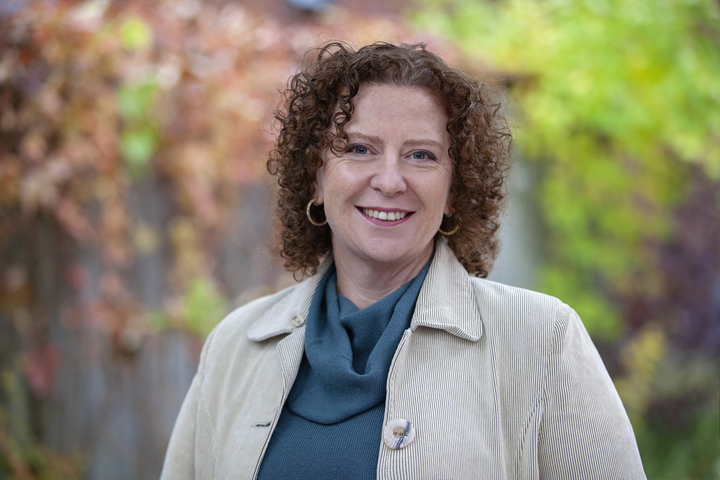
Sarah McCoubrey
Partner at Calibrate Solutions Inc
Sarah collaborates on preventative, educational, and strategic initiatives aimed at improving access to justice and embedding the public user perspective into law reform and systems change through her consultancy, CALIBRATE. She has been retained since 2019 by the United Nations Development Programme as their e-justice expert to support court technology transformation around the world, helping justice institutions and national governments adopt innovative, accessible solutions that serve diverse communities more effectively.
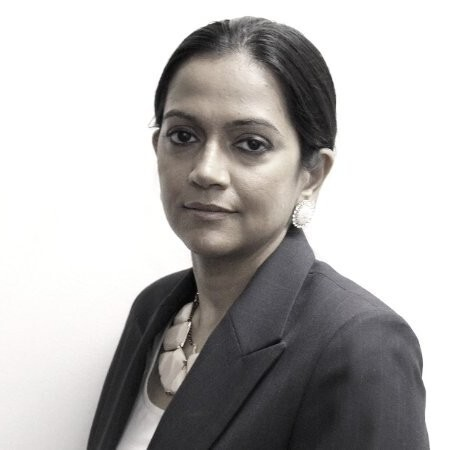
Mona Datt
CEO at Loom Analytics
With an engineering background and over 18 years of experience in legal and insurance operations, Mona Datt founded Loom Analytics to transform court reporting and transcription workflows through intelligent automation. She specializes in streamlining transcription processes for legal firms, public safety agencies, and insurance claims departments, combining technical innovation with deep industry expertise. Having partnered with hundreds of clients across these industries, Mona guides teams through digital transformation with a human-centric approach, ensuring automation tools integrate seamlessly into existing workflows. Her philosophy is grounded in practical application—building intuitive solutions that address real business challenges while serving as a trusted partner in helping organizations adopt AI and automation technologies that enhance productivity and deliver measurable results.