


Securing the Future: Financial Wellness for the Modern Freelancer & Small Business Owner
As AI reshapes the way we work, more professionals are operating independently — but financial security shouldn’t be left behind. This panel brings together experts in health benefits, business insurance, and wealth management to discuss strategies for protecting and growing your financial wellbeing in a rapidly changing economy.

S1- All right, so we're starting with our second session of the day. Welcome, guys. We've got Jesse, Nathan and Taylor. With decades of experience between them for health benefits insurance business insurance or CDL and Nathan for wealth management. So I'll let you guys get started. And then towards the end, we'll have a discussion about what the current trends around AI are doing to your industry. But yeah, I'll leave it to you guys to get started if.
S2- You want to start. Do you want me to start? I can talk about benefits all day long. So yeah, I think one of the things he had sort of talked about was, you know, the value of a and a health insurance program, which is I'm a benefits advisor, Pfizer, which we help corporations manage their group health and dental insurance programs. So as a business owner, the value of that type of program it's really the tax effectiveness of funnelling your personal expenses through a corporation. So a lot of people understand the need for the insurance aspect of it in the event of a claim. I mean, we've seen claims where it was $1.2 million of drug expenses that an employee needed was not insured through the government. And that's where an insurance program can really support employees and business owners needed. But at the end of the day, that's great. But the real value is in ensuring that you are being taxed effective with your. With all your your health and dental expenses through your program. Yeah. So when you need those types of programs, that's when you know, the value of that can really help.
S3- Yeah. And so I'm Nathan Brown, I'm a certified financial planner here in Ontario, Canada. And where Jesse's part of the business is about protecting protecting health protecting wealth through health. I am about growing wealth and tax efficiency and finding the right tools to use. And sometimes those are personal or individual insurance products. I deal with both the offence and defence of financial security. And I'll actually I'll hand it over to you, Taylor, to speak to the sort of the business protection and the business or Jesse's the health wealth or the business. Yeah. Thank you. I, I over my career, I've been doing this about almost 25 years over a range of companies, industries in Canada, the United States and abroad. And I do feel the it's kind of like a if you think of like a triangle in the health and the wealth and the business that they all work together. It's just a matter of what what priorities you have. So definitely they all work together. I think that's and I work with businesses from start up. I've worked with guys looking at the burn rate on their capital, and they've gone on to $200 million companies and they've sold off. So I've seen it from all stages and it's all a bit of an echo here. But it's it's all very important. So in the areas that I focus in I focus on all industries. But primarily you're primarily going to look at your general general liability your errors and omissions. And now in the tech space in particular I focus with AI. You're talking technology errors and omissions, which gets very complicated. Usually because you have business entrepreneurs really invested in the product. But on the flip side, we have underwriters in the insurance world who really don't understand your world as well as they should. And that's kind of where a good broker can bridge that. And on on the business side, sometimes I have to do a quick I have to be a quick study, but that's that's the role I role I'm in. So but yeah, I can I can throw it back to Jesse in terms of of how this starts. But definitely the business aspect how you protect yourselves. And I can go into a little bit of detail but uninsured risk and stuff like that, but I can definitely see that I'm used to seeing technology products that no one's no one's no one's really understood well in the health hospital sector and so forth. So I'm used to seeing the the ignorance, frankly, in the insurance world, the underwriters of AI and how to apply insurance product towards that. And and it's an interesting learning curve for me.
S2- Yeah. I mean, Mona mentioned AI products that you know, that might be affecting our industry. From my perspective, I've worked with health insurance carriers for the last 30 years. They're still using DOS based claims payment. So. Oh. Sorry. Like this. Is that better? Yeah. So I, you know, I'm I'm not too concerned over sort of the AI tools taking over my role definitely as support. But the insurance carriers specifically are are, I think, extremely far behind any sort of automation tool that might help their clients. I've always seen it that the insurance carriers want more claims in my area because it allows them to drive their revenue. Which might be a controversial take, but definitely from my perspective, something that yeah, the the the forward thinking those legacy models just it's not there.
S1- I have a question for you, Nathan. So we spoke about it this morning. You're in wealth management. You've got wealthsimple. You've got a few other portals out there that are self-directed investing. How does that impact you?
S4- Yeah, I think they're they're great because I truly believe that everybody needs to save. There are a few percentage of people out who are set financially good for them. I'm not. Imagine most people in this room are not. And of course that means different things to different people. However, I do know statistically you need to start earlier. The earlier you start with paying yourself saving particularly using the right tools. However, it doesn't matter if you save earlier, you save more, you're going to be better off. It's going to give you options. That's what money is for, to give you options. And something that that Karam said where you know, AI and I would maybe expand it out to technology in general has a mission to please. That's good. That's not bad. That's. But pleasing is not advising. Advising is often and or and where advice and where humans me have the most effectiveness is when our advice does not please our clients, the people that we're dealing with. It comes with sort of hard realities, but also just maybe different ways of looking at things. And for me and for these guys as well, there is a real depth you know, back to kind of the roots thing, you got to understand where someone's coming from or where a business is coming from in order to give advice. So you have to start with the basics. But I think that the tools that are out there they they're wonderful. I would I would I want everyone to start early and the simpler the better. And and the same goes for personal or individual protection as well. Jesse speaks to group benefits, which ultimately gets down to protecting employees. It also there's there's some wonderful products in in that space for owners and executives as well. But you got to have some life insurance. It's pennies on the dollar. You got to have some disability or income replacement insurance. You just have to. Particularly as freelancers, sole proprietors or even if you're incorporated and making $1 million profit a year, you need this stuff to protect yourself and your family. Some of that in the early stages can be very transactional. That's fine. Just get it. But when it comes to the more complex, sophisticated and I would argue and my experience, the more valuable coverage and opportunities, it's not transactional. It comes down to advice. It's not something that is yeah is easy to figure out. So I think the more people get in, the earlier the better.
S1- Interesting. Taylor, you remember my first interaction with you? It was Jesse. You made the intro. I was very frustrated. I had started with a small insurance carrier, so I run two companies and both of them do some level of transcripts transcription handling, high security documents. One is a software company with cyber elements to it with whom we process a lot of very sensitive medical and legal records globally. And usually with business insurance, it's critical that your broker understands your business and it can't be a bot. Most humans don't understand our business, right? And so if the broker doesn't take the time that the person does not sit with you and understand it, it can go really wrong. So my first interaction with Taylor was I think I have an insurance lapse. I think my broker really messed up and did not put in coverage for something, and he had to walk me off that ledge and say, it's fine, I've got you. So to me that's important, right? Having somebody on the other side, especially from a business perspective that actually takes the time, asks you the questions about what it is that you do. And has the background has worked with risk, whether it's personal health insurance, business insurance, wealth management has worked with a similar scenario before because I've said it before in conversation in public, the AI models are trained on previous risk on previous incidents. If there is any need for judgment, any need to apply perspective to a new scenario. Good luck. It's not going to know what it's doing. So me, I get it. I get the fact that whether it's, you know, our industry court reporting financial services, wealth management, insurance right on the on the retail side, you've got bots that can handle auto insurance, right? They might help you find your policy, but are you sure they're going to cover you? And so in the end, having that human layer, having somebody on the carrier side actually go through and understand what your needs are and whether all your risks are covered is critical. So thank you very, very much. Any questions from the audience for this group? Yep.
S5- I am curious what kind of tools do you see being used currently? What you like about them? How practical they are and what they're missing.
S2- Go ahead, give us.
S3- The tools. The question what tools from AI perspective in our industry or in. Well, I have a unique perspective because I don't deal with the wealth or the health. I'm more the operations and entrepreneurs and I didn't really I can get into it, but I do a lot of transportation risk, for example. So I kind of look at the human layer, like Mona said and human error. And as good as AI is and I'm learning myself very quickly. I see it in particular I do I deal a lot with aviation and aerospace and transportation. So for example, we have to look at the I have to look at the risk. I mean I've taken courses I've got university courses on risk management. But it never at that time got into how you integrate AI into the model and how humans are embedding it into their everyday lives. So it's really hard to go in the tools because it's kind of on the fly here to say we're learning from experience. We're real time, real time in our in the business insurance especially. I see the challenges right now when you're implementing AI into human behaviour, building physical products. I think that is the next I don't know how they're going to get to that. I think I know the three, but I know that with, for example, aircraft mechanics, a lot of it is they're using technology or automobiles now are mostly robot robotic mechanized airplanes are going fly by wire now. So you have to have the learning has to be accelerated and you can't it's not just dealing with your hands anymore. You got to deal with your mind. So it's I think the tools have to be improved. Unfortunately, I think there's a slow implementation on the government and regulation regulatory side. I see that at all levels and it's I don't like wasted time. I think time is resource AI can it can maybe save us some time frankly actually. But I think time is something you can't get back. And to help us save time, I know it's helped me, but unfortunately I see a lot of our regulatory bodies not using it wisely. And that's where I think a lot of improvement. So I would urge the crowd and urge your, whoever you can, your lobby groups to try and intelligently expedite the implementation of AI into the learning curve so that we can make better products, especially in this country. I think we have a productivity lag and we need to really make it better and faster in this country.
S4- In my business, particularly on the the investments are on the on the wealth side I got a couple of tools that I love. They're making things faster to analyze and spit out data daily if I want it quarterly on essentially my client portfolios that I build comparing to others, making sure I'm still using what I feel or what are the right components for a portfolio. And on the planning side. So when we're forecasting out what retirement, what what dollars my clients can expect, where the cash flow is going to come from. It AI is just making it so much easier. It does require, though, that, you know, there's a great understanding underneath from the client and the rules, the different accounts. We've got some wonderful new accounts here in Canada. First home savings account, which I love. Tax free savings account. In the States you've got different ones. But the Roth IRA is similar to a TFSA, tax free savings account etc. you got to have that built in. But AI is built into my planning tool that allows me to sort of move the levers and there's lots of them in somebody's retirement income planning. But in the end, it's kind of like having a really, really smart intern or a really, really smart co-op student or junior advisor. These this isn't advice that's coming from this. It's just making it easier and faster for me to get to that advice to the to the client.
S2- Yeah. And from my perspective, it's really just getting rid of all the gerbil where the lobar of sharing data. That's really the biggest use that we're using it for and then reinvesting all that time into providing better, more for our clients. Try not to take away from someone's job, but just adding that extra human layer on top of it to make sure that, you know, our my role specifically is a lot about relationships probably attest to that. So having more of that, allowing for more time to make a phone call and actually talk to somebody or going out and seeing someone. It just allows us to to be more engaged with our clients stuck behind a desk that can easily be extracted. That's the biggest advantage so far. Parents. Carers. Perspective. Sorry. Yeah. We haven't seen a lot from the insurance carriers yet.
S4- And if I, if I, if I could Jessie put you on the spot but so Jessie and I work together and very recently you made the decision to to hire or whatever to buy a software package and basically kind of AI enabled software package to do exactly what you're talking about. What was it about that software and I don't know, give a shout out to them or not, but whatever. What was it that that you were looking or what sold you on on on Lucite?
S2- Yeah, I was just getting rid of that gerbil. Where type manual lobar intensive. Factor and creating reports.
S4- Yeah. So they're taking the data. So instead of you in a spreadsheet instead of you. Whatever. Late at night and we're all. We've all been there. Right? Getting ready for actually meeting with clients in in the hours in behind. You know, you're at home, you're on your couch, you're trying to watch the Leafs game or whatever. The this basically you just tell it to go get it.
S2- No. Okay. I don't think it's it's not there yet for us, but it's definitely it extracts data and then we can use that. But again it's you know, make sure that the data is correct. And so there's still lots of work but definitely takes a lot of the manual entry of all of those numbers.
S4- Awesome. How much time do we have?
S3- There might be a point I was going to raise with AI that when I am seeing in the marketplace is especially in the Canada, United States is a little bit different in terms of insurance is kind of for SME entrepreneurs, freelancers United States. I deal in both both climates at times, in particular with Canada. A lot of us are like Adopt the AI to make life easier. What we're seeing is though, for example, the reliance on cloud cloud computing. Four years ago everyone said, oh, it's in the cloud. It's safe. Insurance rates nosedived. But now we're seeing obviously the internet was designed to let people in, not keep people out. So now we're seeing nothing. Our traditional conceptions of what's secure in the world AI have just heard I don't know a lot about this, but quantum computing is this devastating, penetrating cyber walls and stuff like that. So the in Canada the number one loss leader is water risk for two catching up fast cyber loss AI the industry factors into that cyber world but technology errors and omissions. Again it's not so much the failure of the technology but the people that write it, the failure of the code and how they implement it. And then that's that. That's on paper. Then you have the real world. In Canada, we find that the off balance sheet damage to your reputation. If something were to be alleged, even though three years down the road and the five years down the road. In this court system, you might prove yourself to be correct and you fight the lawsuit for your reputation. So I think in especially in Canada, if you can think about when you're either a freelancer or a consultant or a small business, small to medium business, think about how you use these three elements of insurance to protect yourself. I know it's an expense. I hear that all the time, but if you can transfer that risk at a lower cost and then protect yourself against legal costs, potential a human error and or a competitor trying to bring you down, it's something to think about because the cyber AI loss world, that's what we kind of lump them together. That's now the number two loss leader in Canada. And number three, something to be aware.
S1- To add to that right. Everybody that's attending the the webinar virtually from all over the world, including most of us in this room today, we handle extremely sensitive information, Right. And a lot of people with insurance believe. Oh, that can't happen to me. I read it in the paper. That can't happen to me. But it takes very little for something like this to happen. There are bad actors out there, and the reality is that given the type of data we handle and a lot of our data, whether we like it or not, goes online. When you email a file out that's online. Your email gets hacked. That's an easy entry point. So the Taylor's point that no policy will save you with that cyber coverage, especially for the type of data we handle. We all hope we never have to make an insurance claim, but. It's extremely critical given the type of data all of us handle. Thank you very much, guys.

Meet the speakers
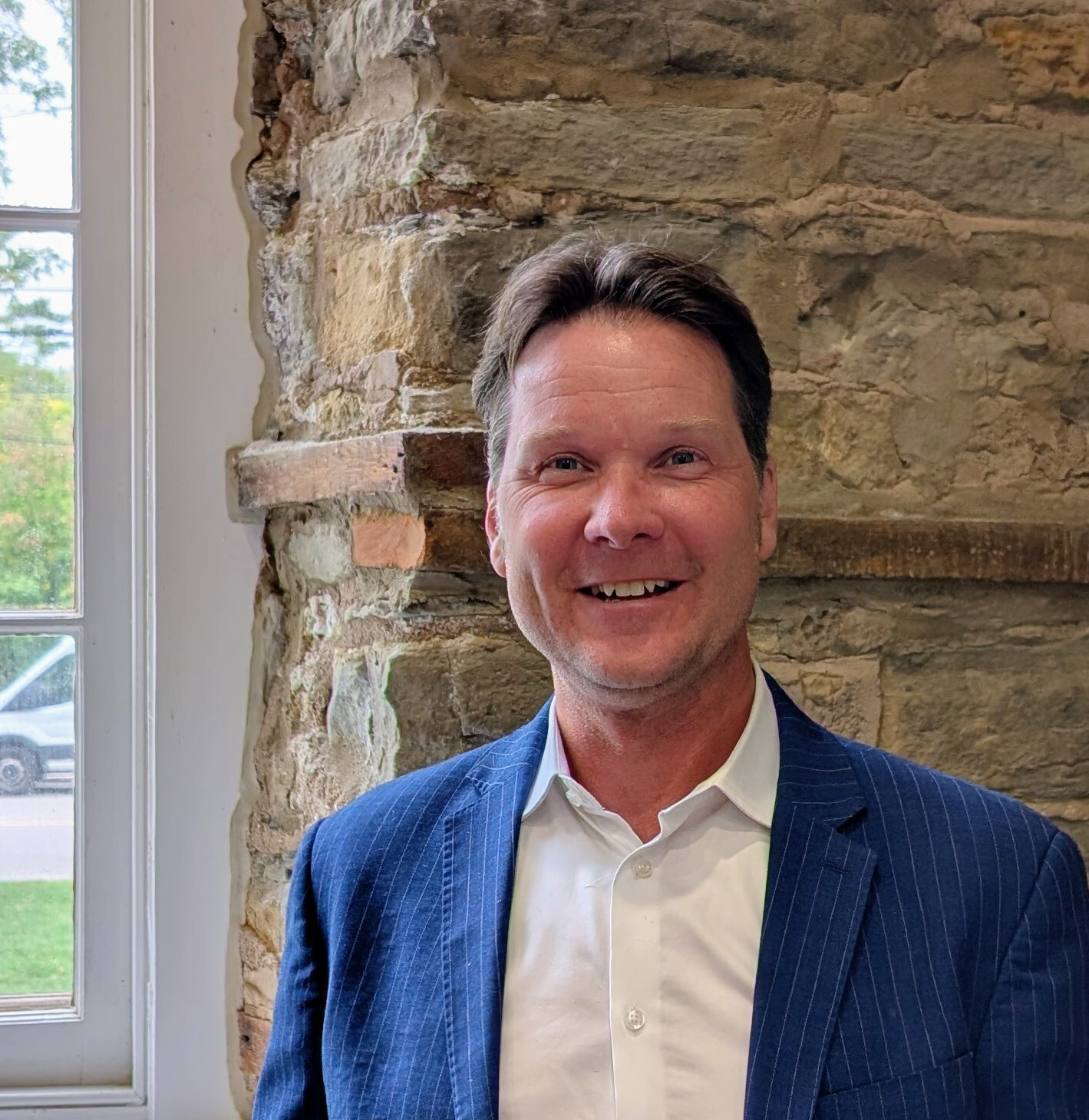
Jesse Boone
Sr. Benefits Consultant at Brown Financial
Jesse Boone has a wide range of expertise in employee benefits consulting after working in the industry for over 2 and half decades. Jesse prides himself on being a maven for his clients and has created a customer concierge service that is unique in the industry.
Jesse is a former partner of GMS Insurance and recently joined Brown Financial after taking a year away to build his family home.
Being a father of 5 girls is his favorite humblebrag. When he is not spending time with his family you can find him on the volleyball court, driving his tractor or doing a project around his house. Jesse and his family live outside of Acton, ON.


Nathan Brown
Vice President Brown Financial Security
Nathan Brown has a broad background in financial services and consulting. Nate has been applying his knowledge and experience to address client and internal business needs since early 2008. Prior to joining the Brown Financial team he worked with some of Canada’s largest corporations as a management consultant and product manager. Nate is a graduate of the University of Waterloo’s Engineering program (1996) and holds an MBA degree from Queen’s University (2001). He also earned his Certified Financial Planner (CFP) designation from the Financial Planning Standards Council.
Nate is a past President of Business Network International’s Networking Powers chapter and is the Vice President of the Greater Hamilton Advocis Chapter. He enjoys competing with his kids at most sports (except hockey), and is a proud member of the Carlisle Rebels Slo-Pitch team (2019 Finalists!). Nate was also voted the Platinum Winner as Financial Advisor in the 2021 and 2022 Flamborough Review Readers’ Choice!
He and his wife Kate Bergsma are parents of three active children Tatum, Atticus, and Emrys. They reside in Waterdown, Ontario.

Taylor Bettinson
Senior Account Executive at Nacora International Insurance Brokers
Taylor Bettinson is an Insurance Broker with over 20 years of experience in broking and risk management across Canadian and global markets. Specializing in aviation, logistics, and public transportation, he brings deep expertise in cyber, professional liability, and balloon insurance.