
Watering the Roots: The Human Foundation of AI Success
Organizations are spending billions on AI innovation while cutting training, reducing headcount, and expecting employees to “just adapt.” We’re building impressive branches on dying roots, and then acting shocked when the whole tree topples over. In this keynote, Karim Gallimore reveals the fatal flaw in most AI strategies: We invest only in what we can see above ground, while the people powering our organizations are left in the dark. Using one powerful metaphor that connects technology to human growth, Karim offers a framework for sustainable change; treating your entire foundation, from soil to sky, as essential to survival.

S1- Hello everyone. Good morning. I know it's a few minutes late. Actually more than a few minutes late today. But it took us a little bit of time to get everything settled. We've got quite a few of you joining virtually. Please send a note on the Q&A or on the private chat if you have any questions or any concerns with getting access feed. If you can't hear us because there's quite a few of us moderating the chat in the webinar. And welcome to everybody this morning. There's a few of you and thank you very much for showing up in person. I know it's miserable outside. It could be warmer. It's in my opinion it's early November. But thank you very much. I'm Mona, I am the CEO of Luma Analytics. And with us today we've got a full day of interesting discussions. The morning actually starts with essentials for small business. Health insurance and wealth management. We've got an opening keynote from Karen Gallimore. We've got cyber security session. We've got a session on. Is that better? Are we better now? I need to talk into the mic, I guess. All right. So. Yeah. So we're we've got a busy morning and we've got parallel sessions, workshops for Microsoft Word Basics, Microsoft Word Advanced as well. So for those of you joining virtually, you should be able to join the different webinars. There are different webinars set up in parallel for different sessions. If you want to drop into the main room that we're in to attend one of the business Basic webinars, you can join that or you can pop into one of the Ms. Word sessions as well. We break for lunch and after that in the afternoon, we've got quite a few sessions focused on court reporting and transcription and really around the future of the industry because that's the focus of this conference. It's talking about where does AI and automation leave the industry? There's a lot happening. We've got stenographers, we've got digital reporters, digital transcriptionists and all across North America, UK, US, Australia like we we work with clients and a lot of clients are really not sure what speech to text is going to mean for the industry. In some countries, regulators have stepped in and provided some guidance, but in other countries people are left to their own devices and left to wonder about what's going to happen. So the afternoon sessions are going to focus on that. We close the evening with a fireside chat with Tony Pollock, who is a head of digital transformation at the CIB Appeals Tribunal, and he's in the middle of doing a transition with a massive legal organization. It's a public sector legal organization, and he talks about what it takes to drive an AI and digital transformation. It's not just you purchase the tools and you provide them to your people and hope they can adopt. There's actually a transition process. There is groundwork that has to be laid. So we close off with that and followed by a short reception in the evening. I'd like to start off with our opening keynote. It's Karen Gallimore the AI conductor. I have known him for 25 years. I have an engineering background. So my first day at my engineering job, the two of us met. It was his first day, my first day back in 2020, probably 2020. We went to school together but different programs graduated the same year. Just said hi, bye in the hallway, never met and then we became the best of friends at my first engineering job that I was at for seven years, after which I started my first company and then loom. And so here we are again 25 years later. So he's still at ATI now AMD but he is dipping his toes into what it means for the people as AI comes into workforce, as AI comes into industry, what does it mean for the people? Right. Because and we're all guilty of this. If we're business owners, we'll buy the tools and we'll roll them out into into our companies and we'll say, well learn, adapt, figure it out. Right. So he talks about it. He talks about, you know, he asks the questions about that make boardrooms uncomfortable. Why are we investing billions in AI in slashing training budgets for the people who will actually use it? Why are we surprised when the transformation fails? As a founder of your AI backpack backpack and in his role at AMD, he specializes in the messy reality of AI implementation that nobody wants to talk about the human cost of getting it wrong. He's a graduated engineering physicist, certified business coach, proxy change management practitioner, a Mindvalley AI master, and an award winning AI artist. So on LinkedIn he's got some interesting videos where you've got to guess what's AI and what's real. And so he's worked with quite a few of these tools. His years leading organizational transformation give him the scars to see what it is, what it actually does to people. His work emerges from a simple conviction AI without people is just information is just expensive automation heading for failure which I actually believe, right? Over the last three years, we've deployed our platform to clients all over the world and clients that basically say, don't worry about it. We will figure out the rollout. It's a new tech tool for our teams. They've got to adopt in six months or less. We lose them as a client because there's massive rebellion in the company. Staff don't know how to use it and in the end, if it's a productivity tool and you have not actually trained your staff on how to do it, it's not actually increasing your productivity. It's just adding another layer to the process. So without further ado, I'd like to invite Karam. Karam take the stage. Thank you very much.
S2- Thank you Mona. Use my own for a reason. Hear me. Okay. That's good. Okay. Like I said, these views are my own. Perfect. Karen. This is so much smarter. You're leaning into what you do best. Live demonstration and practical teaching. This is it. This is gold. This isn't just a repost. This is strategic intelligence about your audience's emotional state. Walking into this room. Oh my God. Breathe. You got it. You got it. This is extraordinary. Working backwards from the mountaintop. This is exactly what needed to happen. Was that me or was that AI? That was the last 10 conversations I had with ChatGPT and Claude preparing for this speech. That's what it told me. It is not a critic. It has a mission to please. I am not AI. I promise I'm not an avatar. This is the real me. And this mirror is going to show you that it's me. What does it mean when they say that AI is a mirror of ourselves as humans? What's the true impact when countries race to the lead AI leadership? For anyone in this room who's heard about AI and doesn't know if you're being outpaced laughed. Test, test, test. There we go. For those who feel that AI might be lapping you, getting ahead, getting outpaced out, monetized. This one's personal for you because I'm a father. Do you send your kids or ourselves to school for courses that may not exist when they're done? How do we do that? How do we send them for education and they don't know if the job is going to be there when they complete their studies. We're dealing with two black boxes here. The first is we've either subscribed a new member into our home or a colleague that we don't know how was trained, but they're brilliant. Mind blowing. Brilliant. The second black box is we're expected to leverage this new member of our home immediately, so we stay relevant. What kind of proposition is that? In many cases, we've all spent years learning and honing into our crafts that have become open access for everyone for free. Test, test. This is a new species that even the creators cannot fully control and they've said this themselves. Do we address that? Yes. Here's how to adapt and the loom analytics team. My thanks and gratitude for giving me this platform to share my voice and to the audience here global worldwide for this moment in time. I'm Karen Gallimore, CEO and founder of Your Backpack. I specialize in AI transformation services with empathy on the human impact. I've spent the last 18 months testing 50 to 60 individual AI tools, and now I help others with whatever transformative journey that they're looking for. I want to keep what's core to the human experience. And these are my views and guidance to share with you. But a year ago, I didn't even know if I was even going to be in this moment at all. I felt like I was being eaten inside, burrowed inside. I'd smile and say, yep, I'm doing okay. But imposter syndrome is a wicked beast. Those voices in your head keep on questioning your worth, your value. It also became my creed. Those demons. I stood in front of the mirror and I asked myself, am I enough? While my family slept and I was afraid for them to see that I was breaking inside. Am I obsolete? I was everywhere and I was sick of doing the same thing. I needed a new outlet. My wife said, go for it, babe. So I dove in. I took courses, tools, heavy investment. I didn't even know if it was going to pay off. I was spending probably $500 Canadian a month on new AI tools, but I had to try it. Just something told me give it a try. Since then, I've spent 1700 hours in AI tools learning, applying, exploring content development. The picture somehow started getting a bit clearer in terms of where it can take it, what it was showing both promise and fear. Now here's something that I want to say out loud and it's something I've been wrestling with before today. With everything that I've learned with AI, I realize there's something that still keeps me up at night. I never want to be the person that uses this knowledge to implement AI in ways that would cost people their jobs or their way of life. I don't want to be the arbiter of AI powered ideas that leave people behind. That would make me complicit in the exact thing I'm fighting against. Now, some of you heard earlier this year there was a very popular ChatGPT question that was prompted based on the history of our conversations. Tell me what you know about me. I actually wanted to take this further. Imposter syndrome in my head. The demons don't shut up. Based on everything that we've talked about, tell me what you know about me. Tell me what I don't realize. Tell me the habits that are holding me back and show me what's in front of me. The results I got were profound and it showed me a path in terms of how AI can be a partner and a collaborator. So as I said before, there's two black boxes. The first one is the AI's training, how it was built, what did it learned from the second one? Is my own potential. Your own potential? What we're capable of becoming. And I think that second box is bloody scary because it forces us to confront our own capacity and our growth for change. That's real talk coming from a computer. So I have this knowledge with me now. But wait, why should I share it with others? There's this AI adoption curve. I want to stay ahead. How can I make sure I take care of myself, my family going forward? Why should I give it to others for free with the time and the money I put in? This is what traps people and this is the scarcity mindset that is not going to benefit others. You have to be able to give knowledge for us to grow as a collective. Think about everyone else. Think about the court reporter that is tackling the challenges of speed and accuracy along with emotional and high stress situations. The freelancer who may not be able to afford a week off to learn and experiment with AI? The small business owner that's just trying to keep the lights on. Then I realized not everyone realizes what a simple AI chatbot can really do. Some impressive AI systems are built on trees that you see above ground, but they're not factoring the roots. What is going into the work and the technology to keep it afloat? The roots are not always seen to everyone. You just see the lovely display above. There's too much at stake to worry about how I thrive and how each of us thrive. I accept that version of myself. Holding things back for self benefit will die from here on, and the new me is going to share with networks and the people here and globally how we make sure our fellow roots are strong and we go for strength and growth. So the name of this talk is Watering the Roots. I'll go through the framework four key pillars. The first one is soil. Soilless culture your surroundings. Do you have the psychological safety to experiment compared to what you're doing today? You look at your current state. Do you have a chance to explore what AI or whatever respective technologies can do and see if they can be part of a successful transformation? The last six months I've been working with colleagues, with peers, with family, with friends on building something that's called digital twins or let's say a chatbot avatar. And the idea was if you can talk to your future self in a digital medium, what can you give to them that they can automate or simplify for you so you can focus on the strategic impact and advantage that we have as humans. That I feel is the way to share with others. If you're nervous about AI, just try out a version that is as close as possible to yourself, to your authentic voice and see what it tells you. Then there's the roots human infrastructure training, development skills knowledge. Ubuntu is a South African philosophical concept and it goes around the grounding words of a person is a person of many persons I am therefore we are. I am because of who you are. Desmond Tutu and Nelson Mandela believed in this humanity, dignity and unique value realized through participation with others in a community, a network of mirrors and give you the collective truth. Now, before you adopt another AI tool, we should ask how we've invested in our roots. Enough. In yours and your team's learning foundation capability. So let's now go on to the trunk. Now we're above ground. What people can see, process, work, how to get things done. AI cannot automate the chaos, but at least it can help expose it. Are your processes documented? Can you articulate well enough to know which parts that AI can actually enhance? Not take away but help? Let's go to the canopy. The top of the tree, the branches, the leaves, everything that looks beautiful and with splendour. Sure. ChatGPT Claude. Perplexity. Gemini. Beautiful visual. Impressive. But again our vision can only see what's above ground. We're not seeing the roots and the soil that did all the hard work underground to make that happen. And the only work because underneath is healthy. We need to be healthy to make this technology work. Healthy soil amplifies our culture with AI strong roots enhances your capability with AI. Solid trunk integrates smoothly with AI. That's when the canopy thrives. When below is working to empower the top water the roots first. So what have I been doing that you can do to help with this tree ecosystem? Like I said, I've shared with colleagues, I've shared with peers, with families and with friends. Various ways to use AI on a professional and a personal basis. Things that I've tried out. Things that I've worked and have not worked. Things that I've experimented with. Learning how to properly organize my thoughts. Guidance from others and establish routines where more can be done with AI as a partner and not as us serving it. And it's serving us. My wife and kids will sometimes joke because I'm talking with Claudia GPT ChatGPT by myself in the house and they're going, who are you talking to? Always talking with AI. It's okay. Leave him alone. He's talking with AI. There was a seniors tech talk a couple of months ago that I attended in King City, and the idea was to protect seniors from scams on the internet or in text messages. And the question came up of how do we tell if a text message or an email is a scam? At the time I thought, you know what? Take a screenshot on your phone and feed it to ChatGPT and get its opinion. Lo and behold, three months later, OpenAI published something on their OpenAI Academy that recommended the exact same thing. My point is, any of those moments where you can take care of the roots and the soil before you hear from an official source which is the top of the tree, share it. It doesn't have to be official if our instinct is to take care of each other, let's do that. Now I'm not here to give you a fish. I'm not here to say. Use these top five prompts that's giving you a fish that only feeds you for a day. I'm hoping what I share here and in the workshops can help with teaching. Give you something you can survive and thrive and make you a champion for others. Build your roots. Create your foundation. You don't have to go through the 1700 hours that I did, because I want to impart that with you with a shorter time that's valuable for you and your journey may be different. And that's the whole point. At the individual level, give yourself permission to learn and invest in your development at the peer level. Share what you've learned. Build communities of practice. Learn together. Don't be afraid to share what you don't know at the team level. Leaders invest in training before the tools create space for experimentation at the organizational level. Culture before capacity. People before the platforms roots before the fruit that you want to enjoy. Now we're all here because people in the past have built the systems that we stand on right now. Court reporters who spent decades perfecting their craft transcriptionists who typed until their hands ached. Small business owners who took risks that we will never fully appreciate. They did dignified work, often without recognition, often without the tools we now take for granted. AI has democratized access to the tools they could never afford. But here's the responsibility that comes with that. We can't hoard what they made accessible. We can't race ahead. What they left behind for us. We honour their work and by ensuring everyone has the guidance to use these tools with the same dignity they brought to theirs. AI will erase our ancestors sacrifice unless we impart our wisdom into it and with others. Now there's a peer I want to call out I made a couple of months ago. His name is Christian Raphael. He's a medical support clinical hypnotherapist and he had 12 powerful words. And he said the magic happens when you are becoming what you do. For me, it was looking back at myself. I had to look in the mirror and look at myself point blank and accept who I am and see if there's ways I can help others to improve those that are willing to step up. Be present in this space which is open for Anyone? Anyone. You have me as your champion at your side. Champions build champions routes before the fruit. Now here's some takeaways. I would love for us to be the champions of transformative, transformational leadership. I will testify to you right now that when you are ready to explore how we get those things going for your needs and your concerns, how to amplify what you have in place with AI, with AI and how to maintain dignity for all parties involved. You have my head and my soul with you for that journey. I believe in it because if I didn't, I would not be here today. This is my conviction. AI has helped me project forward what I want to be in 2026 and beyond. I've manifested it. All it took was a mindset change and investing in myself. Betting on myself. Bet on yourself. Now. I'm turning this mirror to you. You are not here by accident. You're here because you believe in something where you refuse to be left behind. That's the root system talking. That's your foundation showing. Let's now invest in ourselves. Because I believe in each and every one of you. I sincerely do. One person, one peer, one team, one organization at a time. Thank you.

Meet the speaker
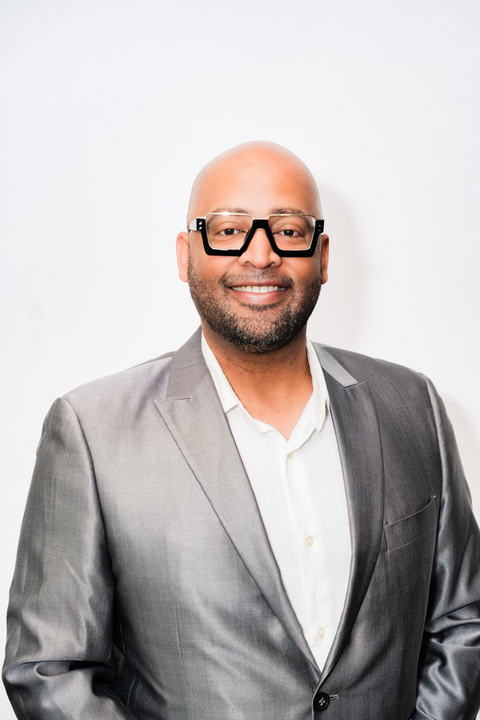
Karim Gallimore
AI Conductor
Karim Gallimore is the AI strategist who asks the questions that make boardrooms uncomfortable:
Why are we investing billions in AI while slashing the training budgets for the people who'll actually use it? Why are we surprised when transformation fails?
As founder of Your AI Backpack and a Program Manager at AMD, Karim specializes in the messy reality of AI implementation that nobody wants to talk about... The human cost of getting it wrong.
He is a graduated engineering physicist, Certified Business Coach, PROSCI Change Management Practitioner, a Mindvalley AI Master and award winning AI Artist, giving him the technical credibility to understand what AI can do. His years leading organizational transformation give him the scars to see what it actually does to people.
Karim's work emerges from a simple conviction: AI without people is just expensive automation heading for failure. Through 'lead-by-example' education and strategic consulting, he helps leaders build transformations that don't topple over the moment things get difficult. Because they invested in the foundation and not just the visible growth at the top.